

Missing a Tooth? Get Dental Implants That Look and Feel Like Your Own
Picture a summer evening in the Gaslight District. Friends are laughing over dinner, and you are quietly steering around the corn on the cob. Or maybe you are the one hiding your smile in photos on Little Traverse Bay.
A missing tooth, or a denture that never quite stays put, can take the fun out of everyday life. It does not have to stay that way. At Brian Klym, DDS, we replace missing teeth with strong, natural-looking dental implants that help you eat, speak, and smile with confidence. Patients come to see us from Bay Harbor, Harbor Springs, and Alanson.
Call (231) 347-2188 to schedule a free implant consultation, or request an appointment online.
What Are Dental Implants?
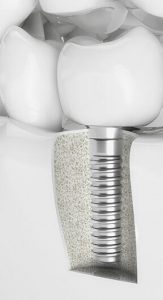
Think of a dental implant as an artificial tooth root. It is usually made of titanium, a strong material the body accepts well. Once it is placed in your jaw, your bone slowly grows around it and locks it in place. Dentists call this process osseointegration. It is what gives an implant its strength.
Benefits of Dental Implants
Dental implants offer a stable way to replace missing teeth while restoring much of the function of natural teeth. Because an implant is anchored in the jawbone, it does not rely on neighboring teeth for support.
Some potential benefits include:
- Natural-looking Appearance: A custom crown is designed to blend with your surrounding teeth.
- Improved Chewing Ability: Implants provide a stable foundation for biting and chewing.bone Health: An implant transfers chewing forces to the surrounding bone, helping maintain stimulation in the area.
- Supports Neighboring Teeth: A single implant can replace a missing tooth without using adjacent teeth as bridge supports.
- Long-term Tooth Replacement: With proper care and regular dental visits, implants can provide a durable restoration.
Explore our guide to the benefits of dental implants for a closer look at how they compare with other tooth replacement options.
Am I a Candidate for Dental Implants?
Many adults with missing teeth may be candidates for dental implants. However, successful treatment depends on factors such as jawbone volume, gum health, medical history, and healing ability.
During your consultation, Dr. Klym will evaluate:
- Gum Health: Active gum disease may need treatment before implant placement.
- Available Jawbone: There must be enough healthy bone to support the implant, although grafting may be an option when bone volume is limited.
- Medical History: Certain health conditions and medications can affect healing.
- Lifestyle Habits: Smoking can interfere with healing and increase the risk of implant complications.
- Long-term Oral Care: Daily brushing, flossing, and regular dental visits help maintain the surrounding tissues.
Having a medical condition or a history of bone loss does not automatically disqualify you. Dr. Klym can evaluate your situation and discuss possible next steps.
For more detailed information, visit our guides to dental implant candidacy and dental implant risks.
Can I Get Dental Implants If I Have Bone Loss?
Often, yes. If your jawbone has thinned, you may need an extra step first, like a bone graft or a sinus lift, to build up the area. Dr. Klym has advanced training in bone grafting and sinus lift and sinus grafting procedures. Learn about supplemental procedures that can help make implants possible.
Types of Dental Implants: Which One Is Right for You?
Not every smile needs the same solution. Here is a plain-English guide to your options:
- Single-tooth dental implants. Replace one missing tooth from root to crown. Best for a gap with healthy teeth on both sides.
- Implant-supported bridges. Replace several teeth in a row. Two or more artificial teeth are connected and anchored to implants, so you may need fewer implants than teeth.
- All-on-4 dental implants. Replace a full arch of teeth using four implants. In many cases, it is less invasive and can be a good fit for people with less bone, and it can often be completed in a single day.
- Implant-supported dentures. Removable dentures that snap onto implants. They fit more securely than traditional dentures and do not need messy adhesives.
- Mini dental implants. A smaller version of a traditional implant, often used to replace a single small tooth or steady a loose denture. They are not right for every patient, especially those without enough bone.
- Immediate-load (same-day) implants. The implant and a temporary or final tooth are placed in one visit, so you leave with a working tooth. Not everyone qualifies.
- Endosteal implants. The most common type, placed right into the jawbone. Most of the options above use this style.
Good to know: Zygomatic implants are still in use, but they are less common today and are not offered by Dr. Klym. Subperiosteal implants sit on top of the jawbone and are rarely used now. If you do not have enough bone for a standard implant, Dr. Klym will talk through the best alternatives for you.
Dental Implants vs. Bridges vs. Dentures
Not sure which choice is best? Here is a simple look:
Dental implants
- Replace the root and the crown
- Do not depend on neighboring teeth
- Help keep your jawbone stimulated
- Take several months from start to finish
- Fill the gap using crowns on the teeth next to it
- Usually faster than implants
- Need the neighboring teeth to support the bridge
Dentures
- Replace many teeth at once
- Are removable
- Can feel loose, and usually need adhesive
Quick tip: If you wear dentures that slip, ask about implant-supported dentures. They give you a steadier fit. For a closer look at your choices, read our guide to comparing dental implants with other options.
The Dental Implant Process, Step by Step
Getting a dental implant involves several stages, from your initial evaluation to the placement of your final restoration. Here’s a general overview of what to expect at our Petoskey office:
- Consultation and Examination: Dr. Klym evaluates your teeth, gums, jawbone, and treatment goals.
- 3D imaging and Planning: A CT scan helps assess your anatomy and plan implant placement.
- Implant Placement: The titanium implant post is placed into the jawbone using the planned surgical approach.
- Healing and Integration: Over the following months, the implant integrates with the surrounding bone.
- Final Restoration: Once healing is sufficient, the abutment and custom crown or other restoration are attached.
- Ongoing Maintenance: Regular dental visits and good home care help protect your implant over time.

Some patients need more procedures, such as bone grafting, before implant placement. Your timeline will depend on your individual treatment plan.
For a more detailed explanation, visit our guide to the dental implant procedure.
Dental Implant Recovery and Aftercare
Every case is different, and Dr. Klym will give you instructions made for you. In general, you can expect some soreness and swelling at first, and you will want to stick to softer foods while the area heals. Call us if pain gets worse, bleeding does not slow down, or something does not feel right.
Once you are healed, caring for implants is simple. Brush twice a day, floss daily, and keep up your regular dental exams and cleanings. Read our tips on dental implant maintenance.
How Much Do Dental Implants Cost in Petoskey, MI?
There is no one price, because every mouth is different. Your cost depends on things like:
- How many teeth you are replacing
- The type of implant treatment you choose
- Whether you need a bone graft or other extra procedure first
- Whether sedation is part of your plan
The easiest way to get a real number is a free consultation. We go over your plan and costs before treatment starts, so there are no surprises. You can also read about the cost of dental implants.
Payment Options, Financing, and Insurance
We want cost to be one less thing to worry about. See all of our payment options. They include:
- Insurance. We accept most insurance plans and are Delta Dental providers. We will help you get the most from your benefits.
- CareCredit. A healthcare credit card with special financing plans for dental treatment.
- Wells Fargo financing. Spread the cost of treatment over time.
- Credit cards. We accept Visa, MasterCard, and Discover.
- Dental membership program. Affordable membership packages for individuals and families, with discounts on dental services.
Why Choose Dr. Klym for Dental Implant Placement?
Several types of providers place implants, including oral surgeons, periodontists, prosthodontists, and some general dentists with extra training. What matters most is the training and experience of the person doing it.
Here is what Dr. Klym brings to your care:
- Dr. Klym is an ICOI Diplomate. He earned a Fellowship from the International Congress of Oral Implantologists (ICOI) in 1999 and a Diplomate in 2018.
- Misch Implant Institute fellowship. He completed a one-year surgical residency with advanced bone grafting, implant prosthetics, and surgical anatomy training with the Misch Institute, and earned a fellowship in 2009.
- Surgical foundation. He did externships in oral surgery at the University of Michigan Hospital and earned his dental degree from the University of Michigan.
- Advanced sinus and bone training. Includes sinus lift and sinus grafting procedures.
- Modern technology. CT-scan-guided implant dentistry for precise planning.
- Comfort-first care. IV sedation, oral sedation, and nitrous oxide are all available.
- Over 20 years of experience and ongoing training with leaders in dentistry.